
Professionalism | Integrity | Experience
Immigration Consultants Hong Kong
Our expert Immigration Lawyers and Consultants guide you & your loved ones on your pathway to Hong Kong, Canada, Europe, U.S.A and other countries across the globe through various migration and citizenship programs.
Begin your global journey with Simard & Associates!

Top Ranked Immigration Consultants in Hong Kong
Simard & Associates, is a leading Hong Kong immigration consultancy firm, with nearly 100% success rate on all immigration cases handled by our experts. Our team includes highly experienced lawyers, supporting consultants, and global immigration experts, also serving as Immigration Consultants in Hong Kong. Clients trust our expertise, solidifying our reputation as a reliable and sought-after immigration firm. Simard & Associates’ commitment to excellence and personalized approach set us apart. With a focus on client satisfaction, we strive to navigate the complexities of immigration smoothly.

Our Track Record
We are leading the immigration Consultants in Hong Kong – Simard & Associates. With 20+ years’ experience, we’re the city’s most trusted immigration consulting firm.. Our team of professional immigration lawyers and consultants, who are Immigration consultants in Hong Kong, are well-versed in the processes of various immigration programs. They will help fulfill your immigration dreams. Our in-depth expertise, as Immigration consultants in Hong Kong, guarantees efficiency during the application process, ensuring accurate filing of all documents. With a high success rate, Simard & Associates stands out among immigration consultants in Hong Kong.
20+
Years of experience in
Global Immigration Laws
25
Named among the top 25 immigration lawyers in the world
5,000
Successfully relocated families and professionals to different parts of the world
26+
Immigration Programs & Services offered
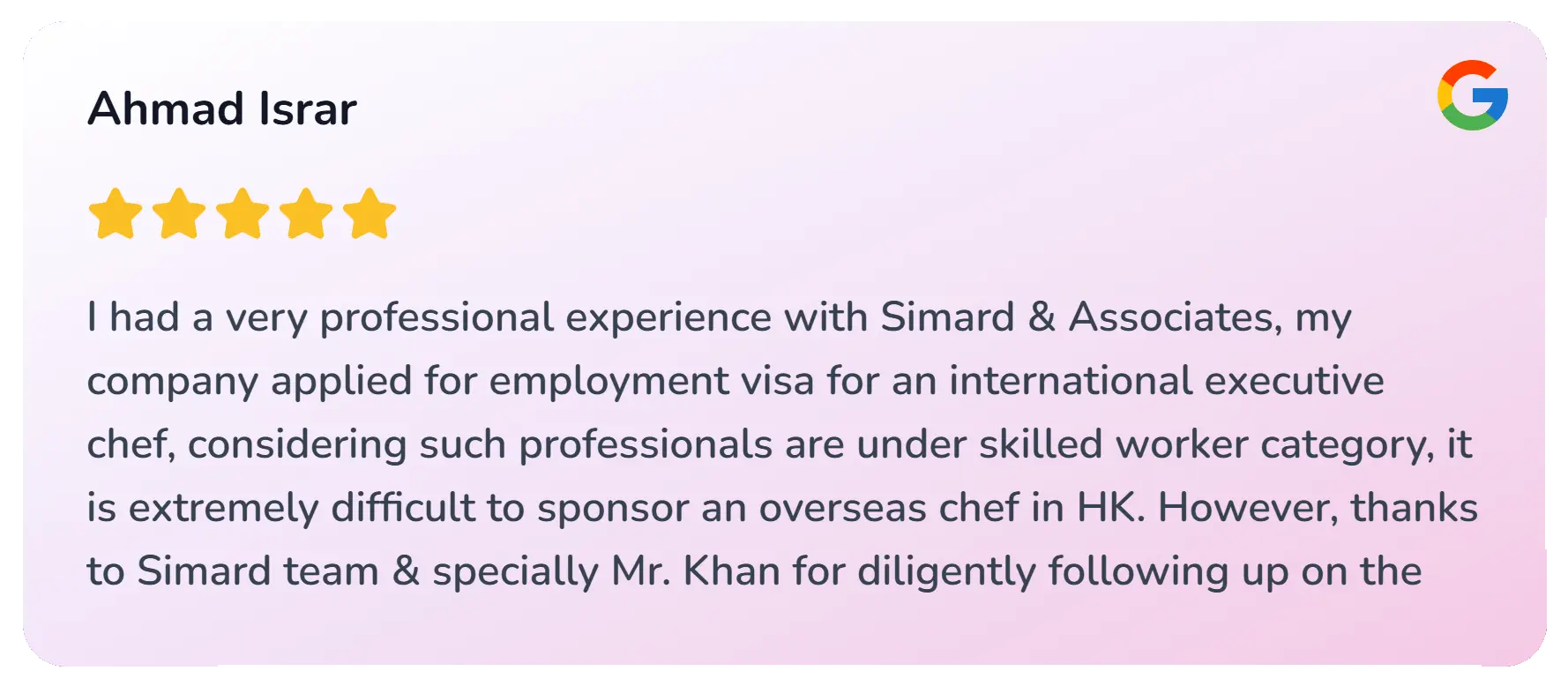
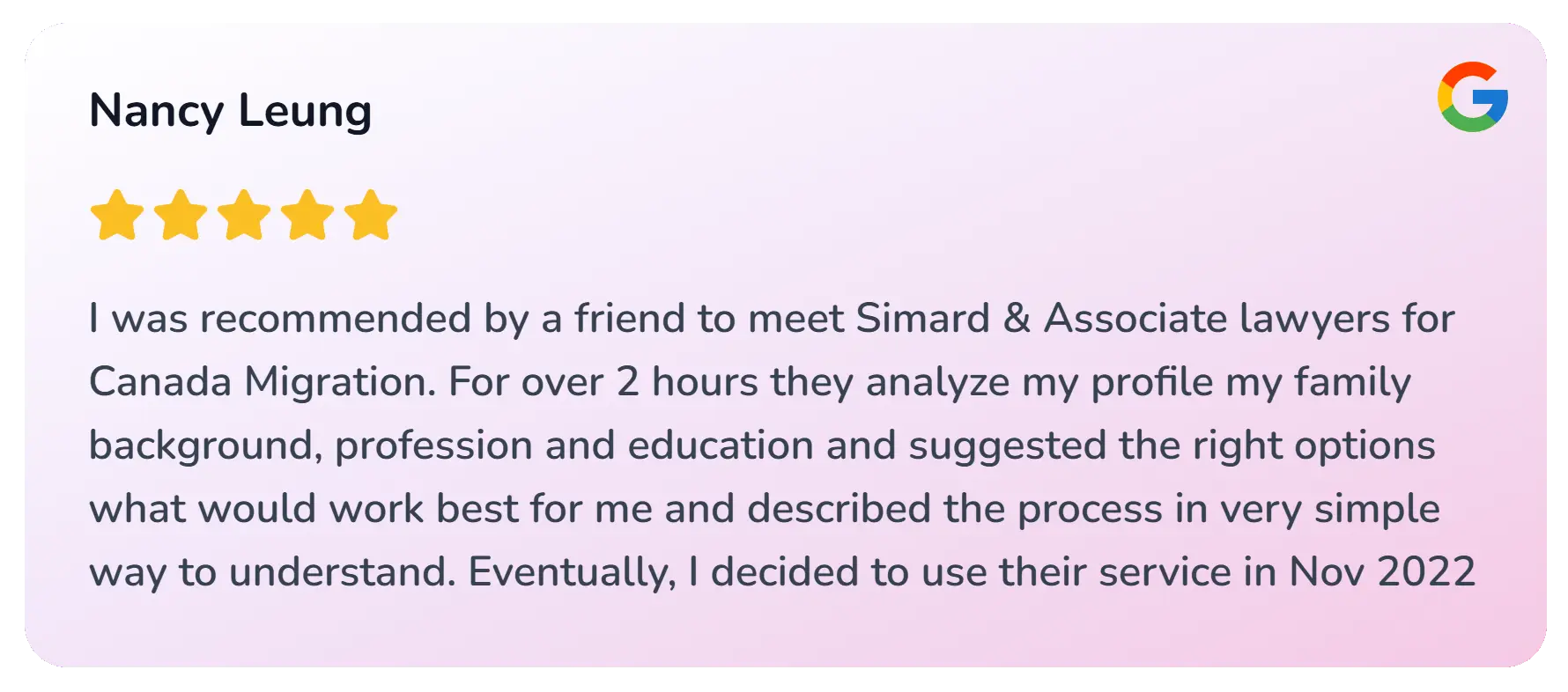
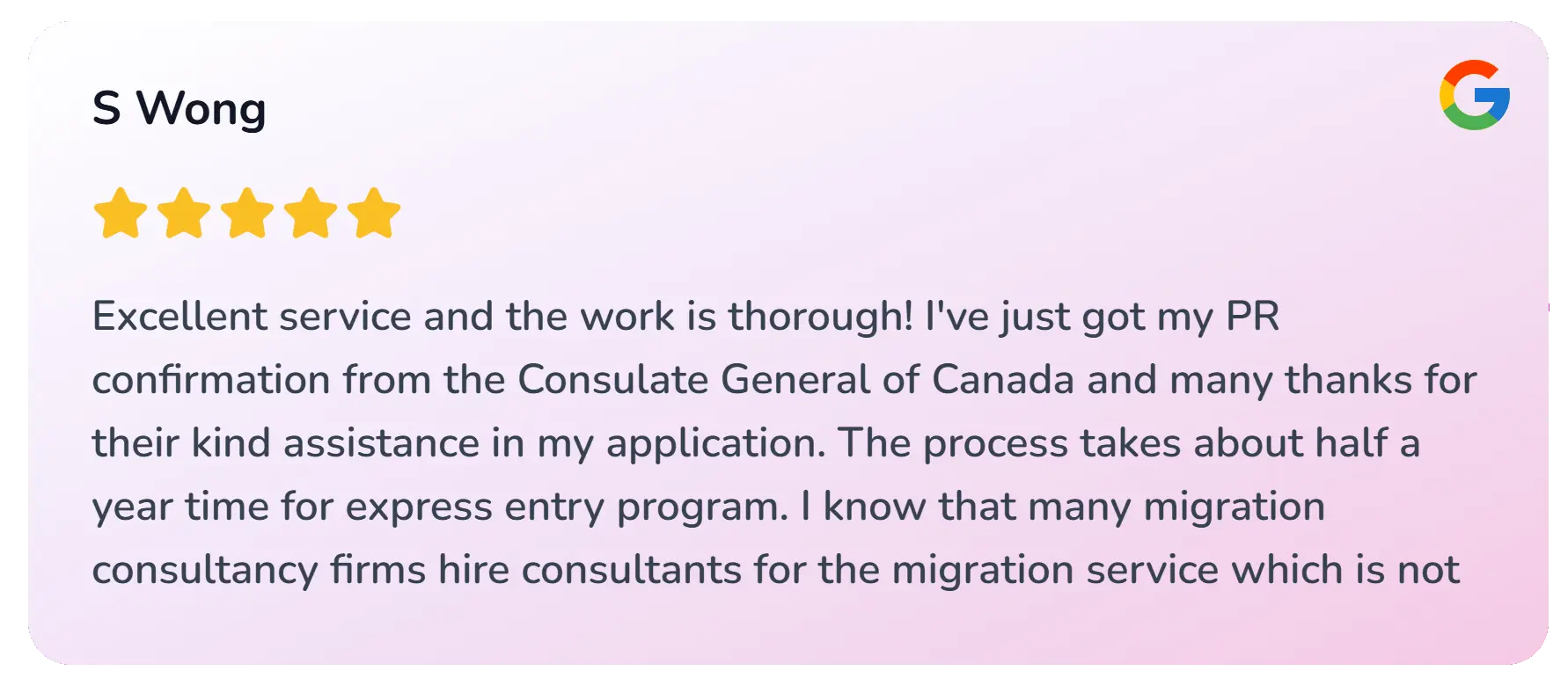
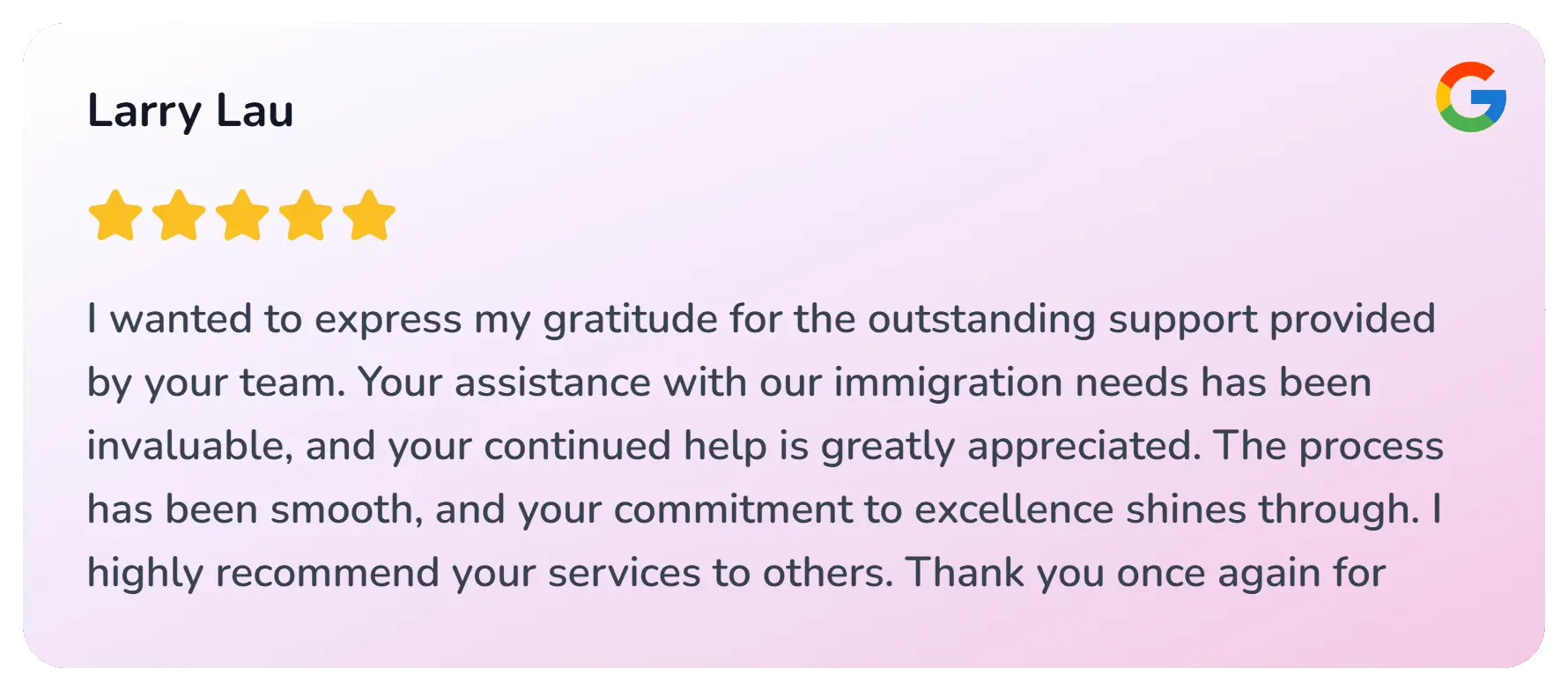
Our Client Testimonials




Latest News & Events








Frequently Asked Questions (FAQs)
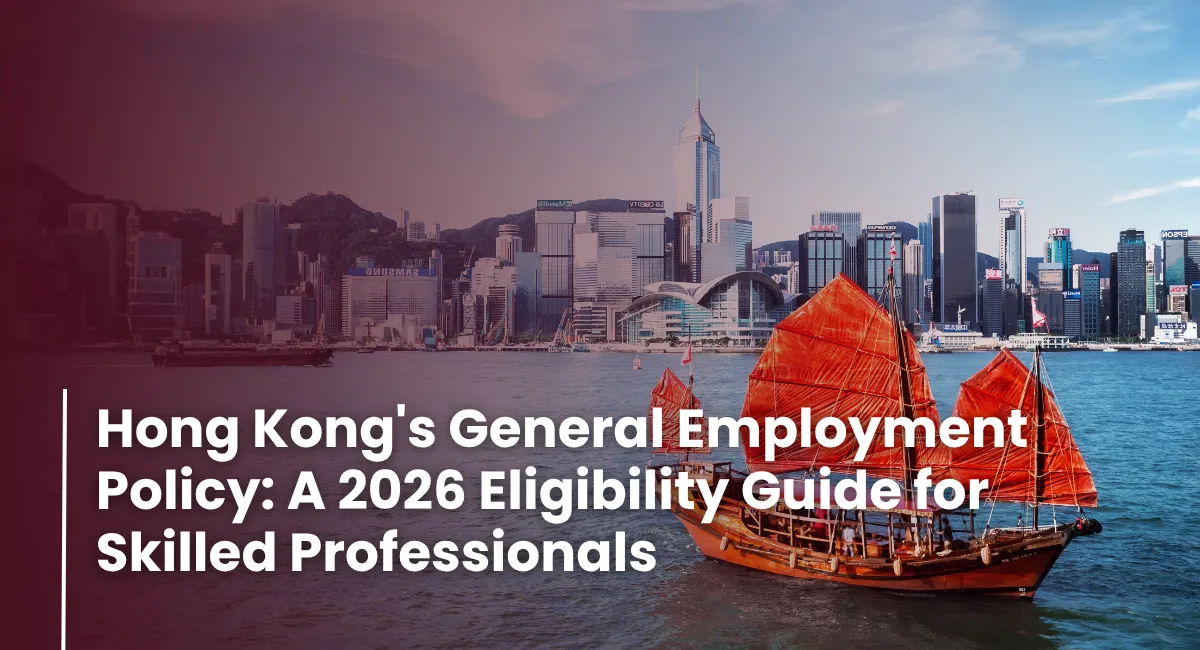
It depends on whether you already have a job offer and how your income and education stack up. The General Employment Policy (GEP) is the workhorse route for professionals with a confirmed job offer and skills not readily available locally, with no quota and no fixed minimum salary, though the Immigration Department will benchmark your package against market rates for the role. The Top Talent Pass Scheme (TTPS) suits people who earned at least HK$2.5 million in the past year or graduated from one of the roughly 200 eligible universities, and it lets you enter Hong Kong without a job in hand. The Quality Migrant Admission Scheme (QMAS) is quota-limited and points-based, and tends to suit strong candidates who want flexibility to explore the local market before committing to an employer. We usually spend the first consultation simply working out which door you should walk through, because picking the wrong one wastes months.
For a clean General Employment Policy application, we tell clients to expect roughly four to six weeks once all documents are in, though the Department doesn’t guarantee a fixed turnaround and complex cases can run longer. TTPS applications are generally quicker for Category A (income-based), often around four weeks, while Categories B and C can take up to eight weeks given the volume of degree and university verification involved. The single biggest driver of delay we see isn’t the scheme, it’s incomplete or inconsistent paperwork, which is why we do a full document audit before anything goes to the Department rather than after a query comes back.
Yes, if you hold a qualifying status such as GEP, TTPS, ASMTP, or QMAS, you can sponsor your spouse and unmarried children under 18. One detail that surprises a lot of clients: a dependant visa spouse has unrestricted work rights in Hong Kong and does not need a separate employment visa to take a job or start a business. The dependant visa’s duration tracks your own visa, so if you’re granted a renewal or eventually permanent residency, your family’s status follows accordingly, though each renewal still needs its own supporting evidence of the relationship and your continued eligibility.
There’s no fast lane, only a consistent one: seven years of continuous ordinary residence, regardless of which visa category brought you here. This applies whether you arrived on a GEP visa, TTPS, QMAS, or the Capital Investment Entrant Scheme (CIES). “Continuous” doesn’t mean you can never leave Hong Kong, but the Immigration Department does look closely at absences, so we advise clients to keep a running log of time spent outside the territory well before they file. Once the seven years are met, you apply for right of abode, and dependants who have been on the visa for the same period can usually apply in their own right too.
CIES, relaunched in 2024 and enhanced further in 2025 and 2026, lets eligible individuals obtain residency by investing HK$30 million, made up of HK$27 million in permissible assets (listed equities, bonds, eligible funds, and capped real estate) and HK$3 million placed into a portfolio managed by the Hong Kong Investment Corporation. You need net assets of at least HK$30 million held for six months before applying, and unlike some “investment visa” schemes elsewhere, you’re not required to run a business here. It suits people who want a residency foothold in Hong Kong through passive investment rather than employment, and after seven years of ordinary residence the same right of abode pathway applies. This is a scheme where the details of what counts as a “permissible investment” change periodically, so we always confirm the current rules against the Immigration Department’s latest guidance before an application is structured, rather than relying on last year’s checklist.
In our experience, the most common reasons are a remuneration package that doesn’t look commensurate with the role, gaps or inconsistencies between the CV and supporting documents, and academic credentials the Department can’t independently verify. Rejections are rarely about the applicant being unsuitable in principle, they’re about the file not proving what it needed to prove. You can request a review or, depending on the visa type, lodge an appeal, but success usually depends on identifying exactly which element the Department found unconvincing and addressing it with new evidence rather than simply resubmitting the same file. This is genuinely one of the more fixable problems in immigration law if it’s caught early.
Plenty of straightforward GEP and TTPS applications go through without legal help, particularly Category A of the TTPS where the income test is objective and well documented. Where we tend to add real value is in cases with any complexity: unusual employment structures, self-employment or business ownership income, prior visa refusals anywhere in the world, gaps in someone’s immigration history, or family situations that don’t fit the standard template. The cost of getting it wrong, a rejected application, a lost job start date, a stalled relocation, is almost always higher than the cost of a proper review upfront.
Fees vary considerably depending on complexity, from a few thousand Hong Kong dollars for a straightforward single-applicant work visa review to a substantially higher fixed fee for CIES structuring or a contested case involving prior refusals. Government filing fees are separate and comparatively modest, for instance the TTPS application fee is HK$230 per applicant. We quote on a fixed-fee basis wherever the scope is clear, precisely because we think open-ended hourly billing is the wrong model for something as outcome-focused as a visa application, and we’ll tell you upfront if your situation looks more complicated once we’ve reviewed your documents.
If you’re on a GEP visa, yes, a change of employer requires a fresh application demonstrating the new role still meets the same eligibility criteria, and you should not start the new job before approval comes through. If you’re on TTPS or QMAS, the position is more forgiving: your visa isn’t tied to a specific employer, and you simply need to show ongoing employment, self-employment, or active business at your next renewal point. This distinction catches a lot of people off guard, and getting the timing wrong can leave you technically without valid work authorisation, so it’s worth checking your specific visa conditions before you hand in notice.
As of the policy change effective 1 March 2026, renewal applications can now be submitted up to 90 days before your current visa expires, which gives considerably more breathing room than the old window. Submitting in good time matters because there’s no automatic extension if your renewal is still pending on the expiry date, and being in Hong Kong without valid leave to remain, even briefly, can complicate future applications. Our practice is to calendar renewal deadlines the moment we’re engaged on a matter, precisely so this doesn’t come down to the wire.
Start planning for your immigration pathway
Simard & Associates’ success stems from our professionalism, transparency and effectivity. Our clients’ needs and satisfaction is our priority. Contact us to arrange for a call or meeting to set your immigration plan in motion.
Start planning for your immigration pathway
Simard & Associates’ success stems from our professionalism, transparency and effectivity. Our clients’ needs and satisfaction is our priority. Contact us to arrange for a call or meeting to set your immigration plan in motion.
